Situbondo DLH Affirms Industrial Wastewater Must Meet Quality Standards Before Discharge into the Sea
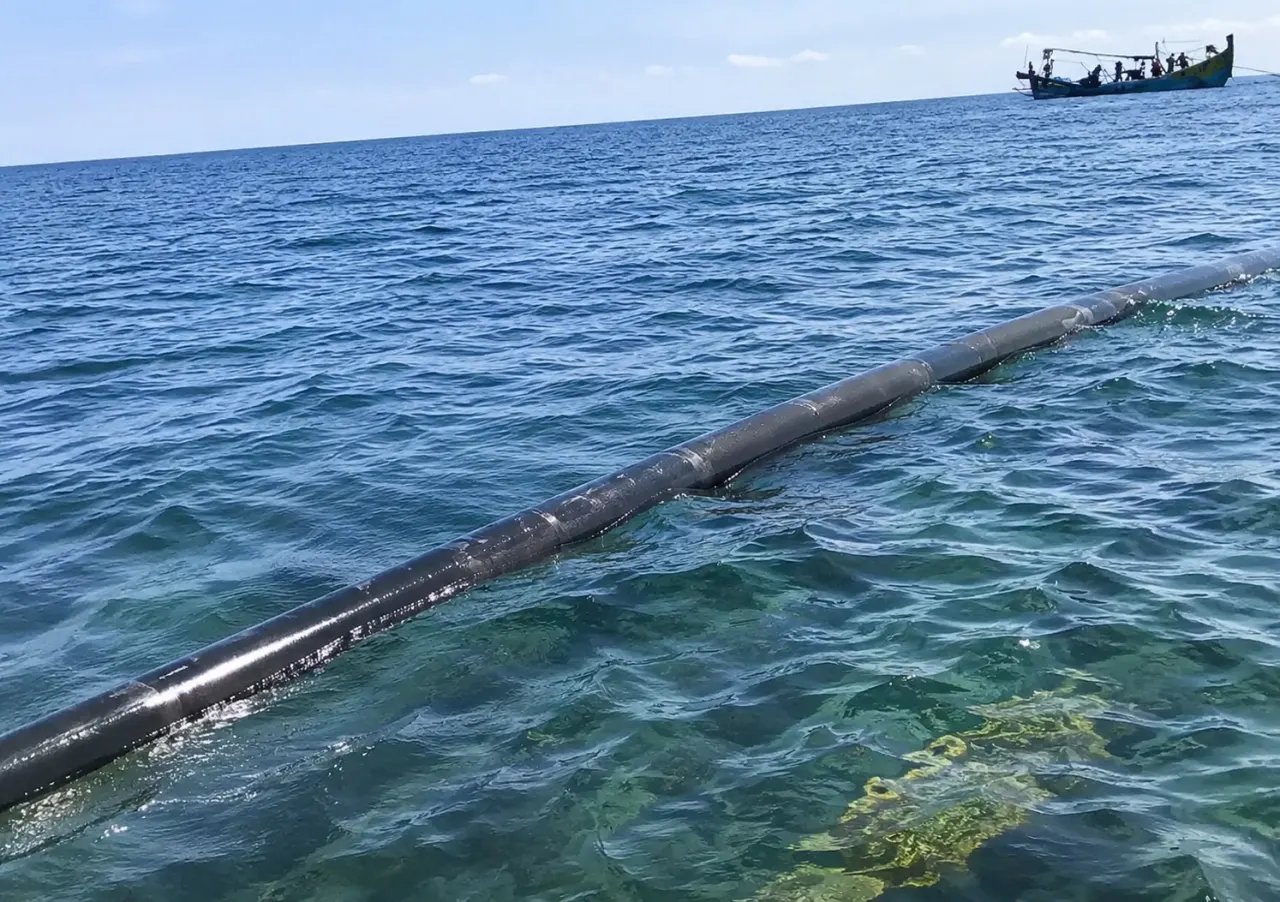
UPDATEYUK - The Situbondo Regency Environmental Agency (DLH) emphasizes that every industry that produces wastewater is obliged to treat it through a Wastewater Treatment Plant (IPAL) before discharging it into the environment. This statement was made in relation to the existence of a pipe to the Situbondo sea located in the Banyuglugur District, which is known to be connected to the activities of PT Fuyuan Biologi Technology.
The Banyuglugur sea pipe has recently drawn public attention as it extends into the sea waters. However, the Situbondo DLH assures that the channel has the necessary permits and its use must comply with applicable environmental regulations.
The Head of the Pollution Control and Environmental Damage Division of the Situbondo Regency DLH, Ranti Seta Ayu Pratiwi, stated that her agency is aware of the pipe's existence. According to her, the pipe belonging to PT Fuyuan Situbondo has obtained a permit for the Conformity of Marine Space Utilization Activities (KKPRL), which falls under the authority of the Ministry of Maritime Affairs and Fisheries (KKP).
"Yes, we know. It already has a KKPRL permit, the authority is with the KKP," said Seta when contacted on Sunday (21/6/2026).
According to Seta, the existence of a channel leading to the sea is not an issue as long as it is used according to regulations. The main concern is the quality of the seaweed industry wastewater discharged through the pipe.
"Pipes are permissible. What is not permissible is discharging untreated wastewater and wastewater that exceeds quality standards, that is not allowed," she said.
She explained that all industrial wastewater discharged into the sea must first undergo a treatment process at an IPAL. Furthermore, the treated effluent must meet the wastewater quality standards set by the government to prevent environmental pollution.
"It is mandatory to pass through an IPAL, and the results must be below the quality standards. The point is that the wastewater is treated and does not exceed the quality standards," she said.
The Situbondo DLH also emphasizes that each industrial sector has different quality standards. For the seaweed processing industry, there are specific provisions that must be adhered to so that business activities do not impact the coastal environment or marine waters.
"According to regulations, wastewater must be treated and must not exceed the quality standards for seaweed wastewater," she said.
Meanwhile, PT Fuyuan Biologi Technology confirmed that the pipe extending to the sea in Situbondo is a company facility. The channel is used to discharge water from the seaweed washing process after it has undergone a treatment process.
PT Fuyuan Biologi Technology Manager, Elvira, explained that the water discharged is not raw waste, but water that has been processed according to procedures and supported by technical studies.
"What comes out is just washing water. The seaweed washing water has also been processed and there are indeed technical studies for it," said Elvira.
She ensured that all production water first enters the Wastewater Treatment Plant (IPAL) before being discharged outside the company area.
"It goes into the IPAL first, it's treated first, then it comes out," she said.
With this explanation, the Situbondo DLH reiterated that supervision of industrial wastewater treatment, especially for the Situbondo seaweed industry, will continue. This is to ensure that the quality of seaweed wastewater discharged into the environment continues to meet standards and does not cause pollution to the Situbondo environment or damage the marine ecosystem.