Bahlil Taps Attorney General, BIN to Investigate PLN Coal Supply Crisis, Highlights High-Calorie Coal Issue
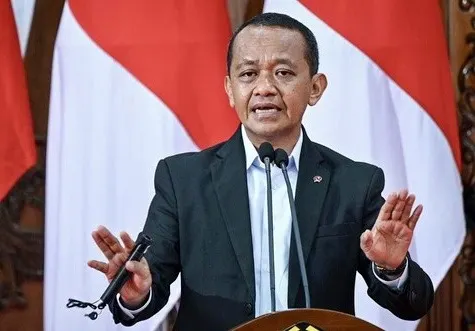
Minister of Energy and Mineral Resources Bahlil Lahadalia has engaged the Attorney General, BIN, and the House of Representatives to investigate PLN's coal supply issues. The government has identified challenges with high-calorie coal.
UPDATEYUK - Minister of Energy and Mineral Resources (ESDM) Bahlil Lahadalia gathered a number of high-ranking state officials to discuss the issue of coal supply affecting the operations of PT PLN (Persero)'s power plants. This step was taken following power supply disruptions and rolling blackouts that occurred in several regions in recent weeks.
The cross-agency meeting was attended by Attorney General ST Burhanuddin, Head of the State Intelligence Agency (BIN) M Herindra, Deputy Speaker of the Indonesian House of Representatives (DPR RI) Sufmi Dasco Ahmad, Minister of State Secretary Prasetyo Hadi, and Cabinet Secretary Teddy Indra Wijaya.
Read Also: PLN Asks Residents to Remain Alert, Power Disruptions in East Java Still Potentially Occur
According to Bahlil, the government wants to know the main cause of the disruption in coal supply to power plants, even though national coal availability data is considered sufficient.
"Yesterday I had a meeting with the Attorney General, Head of BIN, DPR, Deputy Speaker Mr. Dasco, myself, Minister of State Secretary, Cabinet Secretary," said Bahlil at the Energy Forum at Borobudur Hotel, Jakarta, Thursday (25/6/2026).
Government Traces Root of Coal Supply Problem
Bahlil said the current situation experienced by PLN reminded him of the coal supply crisis in 2022. At that time, the government even took steps to temporarily halt coal exports to ensure the needs of domestic power plants.
Therefore, the government is now choosing to conduct a comprehensive evaluation of the coal supply chain to ensure the cause of the problem is truly known.
"We want to dissect this, what is PLN's real problem. Because PLN in 2022 was also like this," said Bahlil.
PLN's Coal Contracts Considered Sufficient
In the meeting, the Ministry of ESDM also evaluated national coal demand data, especially for PLN power plants.
Based on the Domestic Market Obligation (DMO) scheme, PLN's coal needs are estimated to reach around 154 million metric tons annually.
Meanwhile, the government has set an obligation for mining companies through the Work Plan and Budget (RKAB) approval to supply around 180 million to 190 million metric tons of coal to the domestic market.
Of this amount, around 160 million to 170 million tons have been verified and are considered ready to be fulfilled by producers.
On the other hand, coal procurement contracts secured by PLN until June 2026 have also increased. From an initial 134 million tons, it has now reached 141 million metric tons.
With these figures, Bahlil estimates that based on PLN's annual needs calculation, there should only be around 13 million tons remaining.
Read Also: Prabowo Allocates Rp258 Billion for Regional Roads in South Sulawesi, 20 Regencies/Cities Benefit
High Calorie Coal Becomes a Constraint
Preliminary evaluation results indicate that the main problem does not lie in the amount of coal available, but rather in the type of coal with specific specifications required by power plants.
The government found that the supply of coal with medium to high calorie values, i.e., above 5,000 kcal/kg, has become the point of contention because it is used as a mixing material in the operation of PLTU (coal-fired power plants).
"We checked, there is medium coal with a calorie above 5,000 for mixing. This is what is needed," said Bahlil.
According to him, the government has actually provided coal allocation through the DMO policy. Therefore, fulfilling the technical specifications of coal is the responsibility of the supplier companies as well as the procurement parties.
Read Also: Dasco Calls Pertamina CEO, Threat of Layoffs for 55 Thousand Workers Becomes Spotlight
Government Ensures Energy Supply Remains Secure
The government emphasizes that the investigation process is still ongoing to ensure that the cause of the supply disruption can be resolved immediately.
The evaluation results will later become the basis for taking further steps to ensure that the coal supply for power plants remains secure and does not cause further disruptions to national electricity services. (*)